


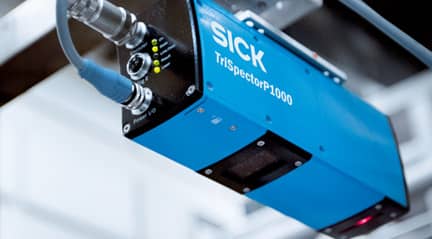
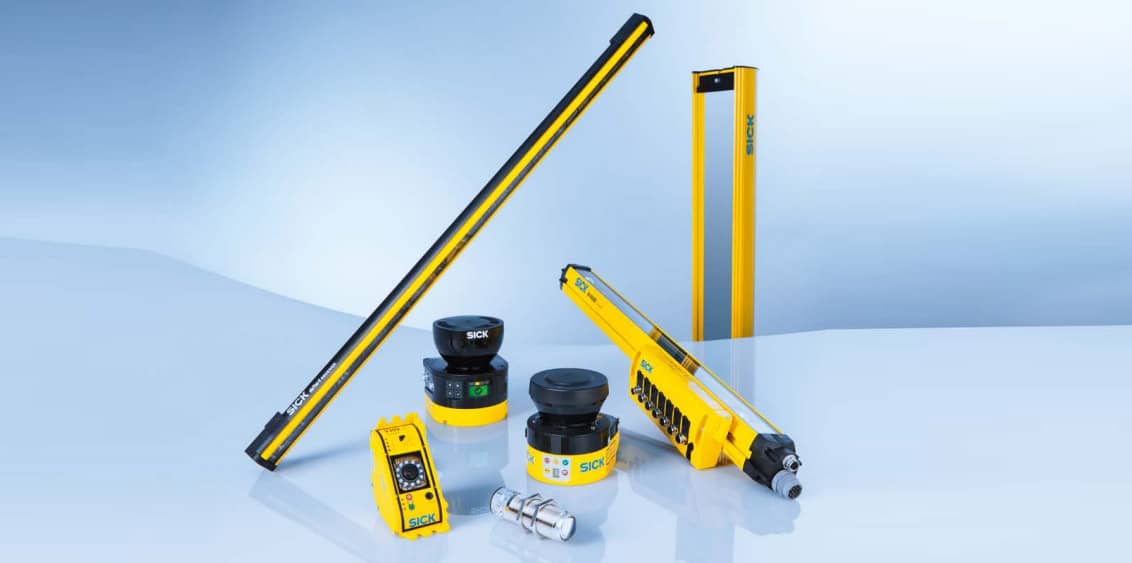
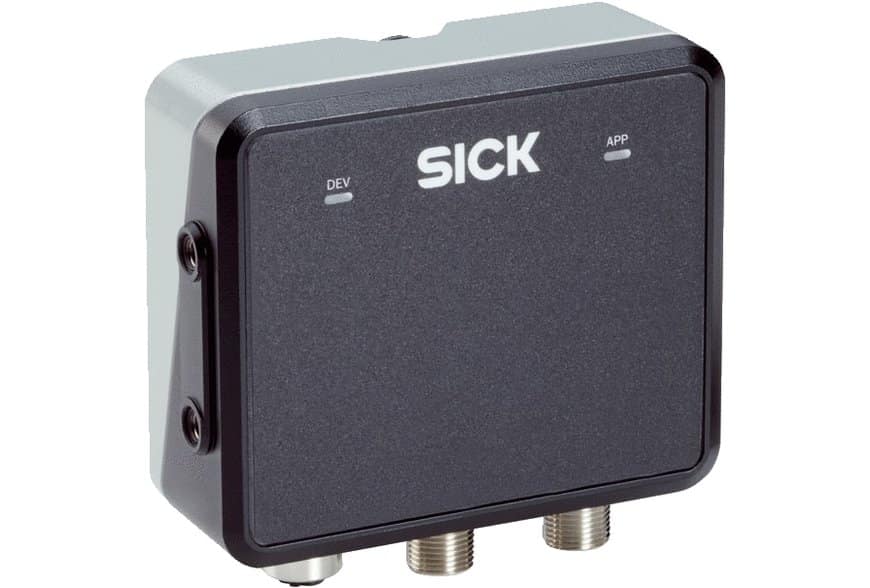
The RMS1000 uses state-of-the-art FMCW (frequency modulated continuous wave) radar technology in the 61 GHz frequency band and was specially designed for challenging industrial tasks that also require a high degree of sensor adaptability. This applies first of all to the actual detection: With the RMS1000, up to four freely adjustable zones can be monitored and the radial distance and speed of objects – even several at the same time – can be measured at working distances of 0.4 m to 100 m. Versatility is also required when integrating the sensor into control systems: In this case, the RMS1000 offers all the necessary options with industry-standard I/O interfaces and Ethernet TCP/IP, as well as CAN J1939, which is common in automotive networking. Nickel-plated plug connectors and industrial M12 connection technology ensure corrosion-proof, vibration-resistant and reliable cabling.
Temperatures are no problem
The permissible ambient operating temperature is specified as -40 °C to +65 °C. In the event of rapid temperature changes, for example when changing from a freezer area to a heated hall area, a pressure compensation diaphragm compensates for temperature-related pressure changes in the sensor. This maintains complete availability and detection reliability at all times.
Parameterization via web browser
The parameterization of the RMS1000 via web browser is intuitive. Here, the horizontal aperture angle can also be set up to a maximum value of ± 60°, depending on whether a wide or a narrow zone is to be monitored. The measured values can be output as raw data and thus used flexibly in a wide variety of detection and collision protection systems.
Wide range of applications
Its rugged design, versatility and reliability open up a wide field of applications for the RMS1000 radar sensor. As a driver assistance system, it is used, among other things, for collision warning on cranes, in mobile automation or even as a truck docking aid on loading ramps. The RMS1000 can detect people and vehicles in front of gates and open these automatically. The detection of ships in locks or the non-contact measurement of water levels are other great examples of applications.
